
 DE
DE  DA
DA  EN
EN  NO
NO  SV
SV -
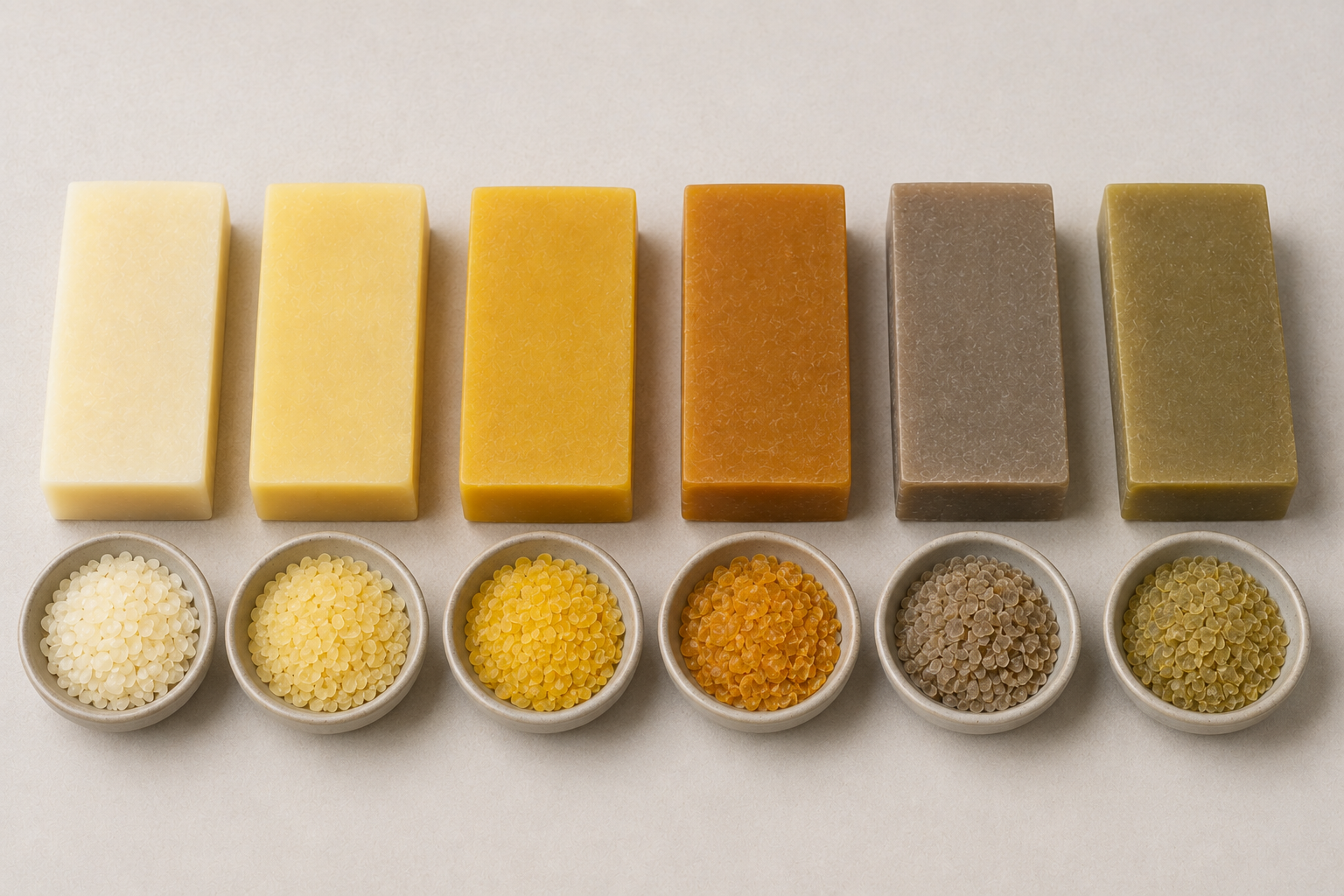
Beeswax Colour – What the Shade Actually Tells You
Colour is the first thing everyone asks about. Lighter must mean better, surely? Not really. And it’s worth knowing why before you judge a batch by eye. Fresh wax straight from the bee is nearly white. Some of what darkens it is unavoidable and perfectly harmless – pigments from pollen and propolis, and the age…
-
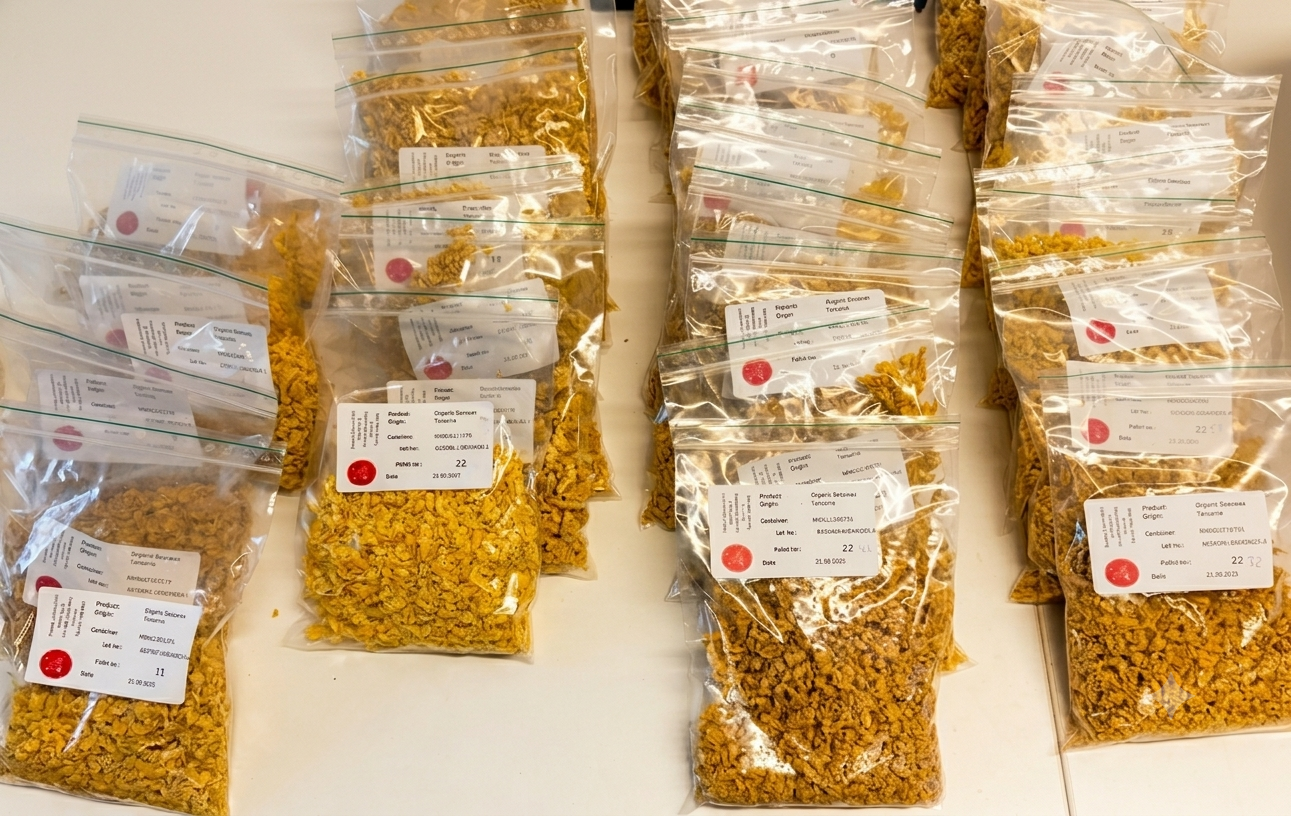
What’s actually in our beeswax — lab results, shipment by shipment
Quality claims in the beeswax industry are easy to make and hard to verify. We’ve been trading wax for over 10 years, and our answer to that has always been the same: test every shipment and publish what we find. Here’s the latest: When two containers of organic beeswax arrived lately from our trusted partner…
-
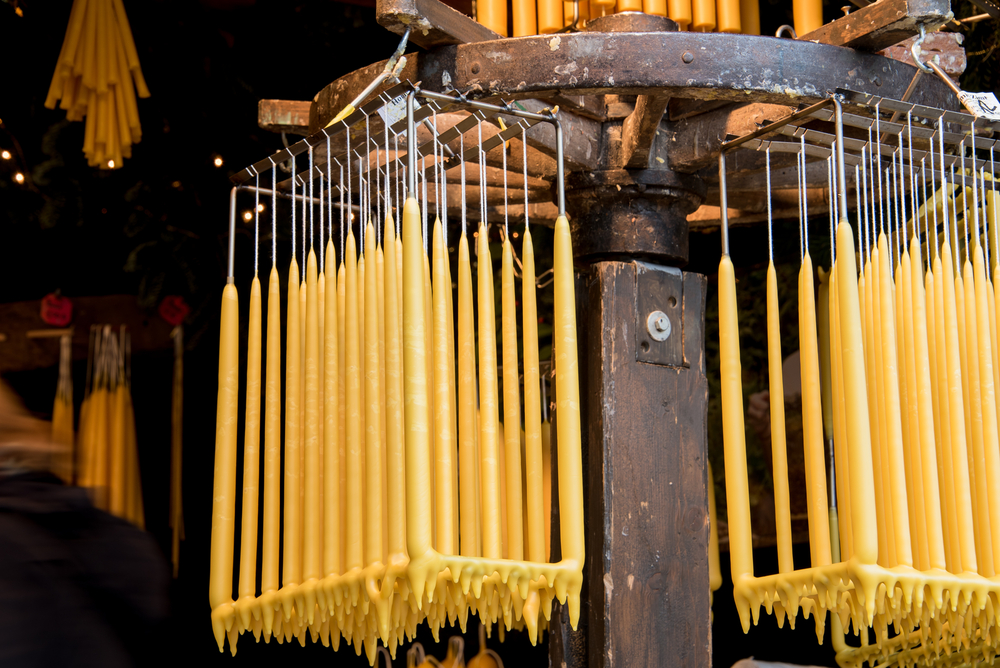
Beeswax for Candles – What’s Worth Knowing
Not all beeswax burns the same way.If you’ve ever worked with beeswax from different sources, you’ve probably noticed it: one batch burns cleanly and slowly, another smokes or drips. The wax looks the same – but the results aren’t. That’s not bad luck, it’s chemistry. Melting point should sit between 62–65 °C. Too low and…
-
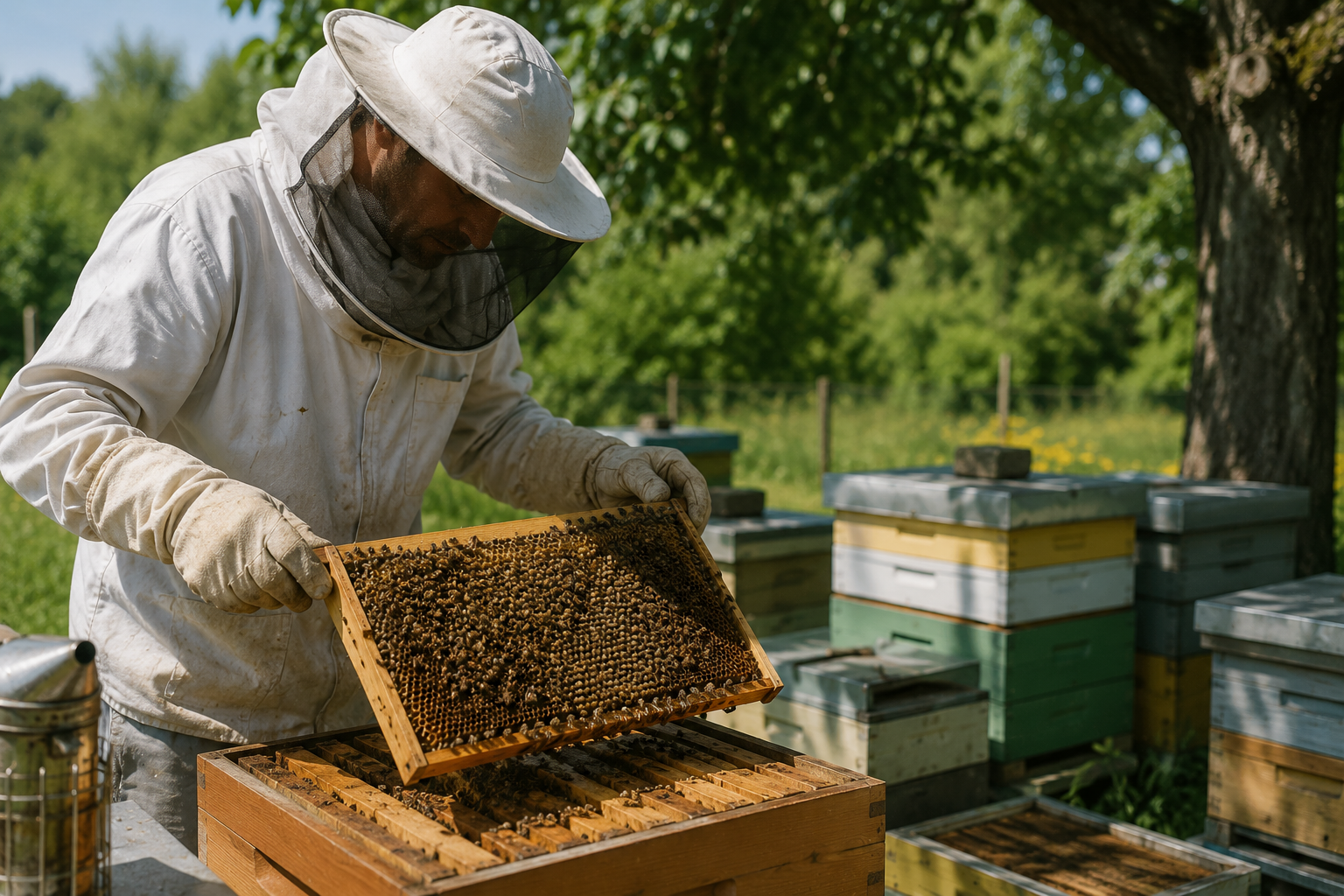
Beekeeping – Where It All Starts
Most people who buy beeswax have never seen how it’s actually made. That’s understandable – it’s a long way from a beehive to a block of refined wax or beeswax pastilles. But understanding where beeswax comes from helps explain why quality varies so much, and why sourcing it well is harder than it looks. How…
-
Beeswax vs. Paraffin – An Honest Comparison
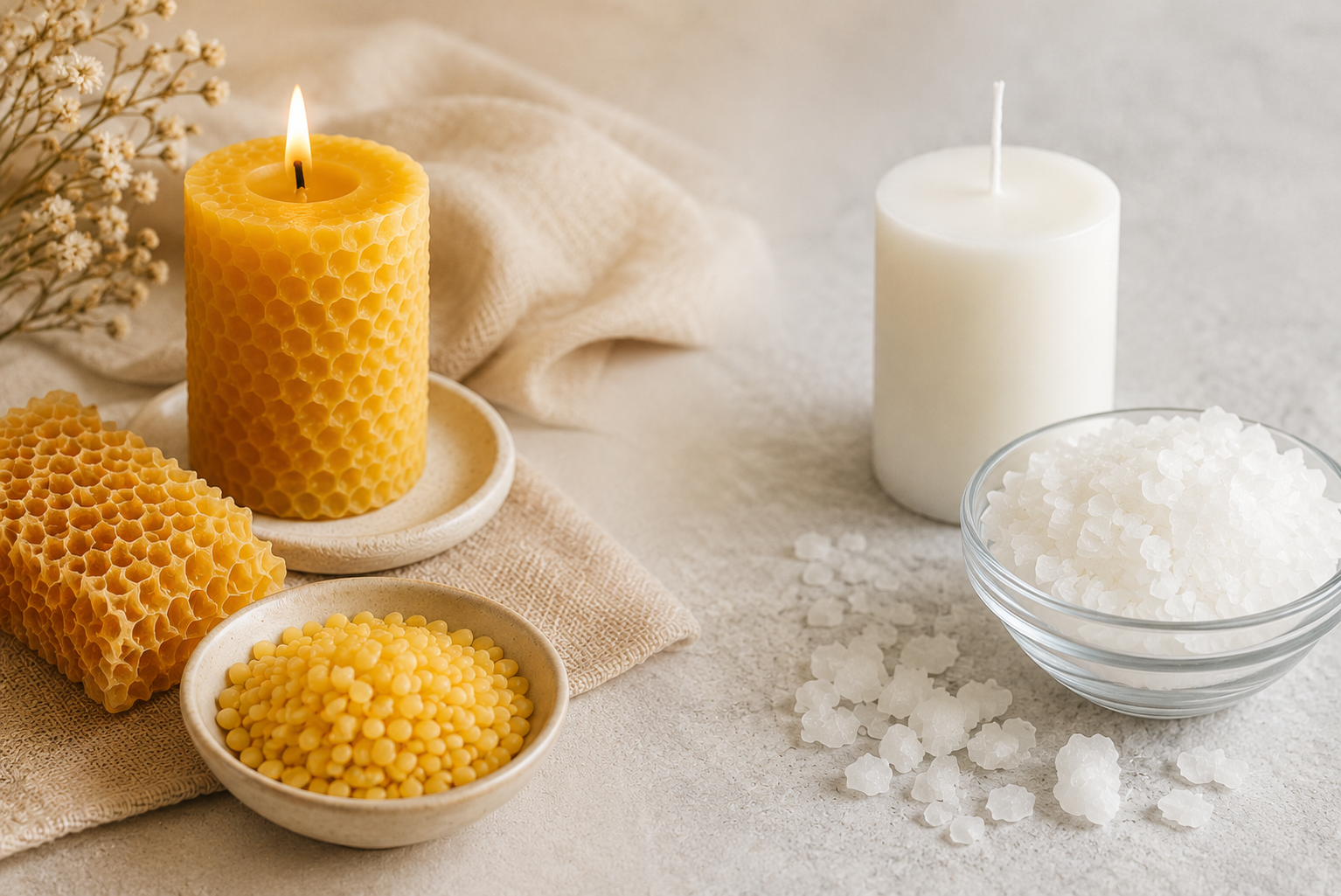
Paraffin is cheap, consistent, and easy to work with. It’s the reason it dominates candle and cosmetics manufacturing worldwide, and there’s nothing wrong with that. But for certain applications, beeswax simply does things paraffin can’t – and understanding the difference helps you make the right choice for your product. Burn qualityBeeswax has a higher melting…
-
Pure Beeswax from Denmark – No Blends, No Middlemen
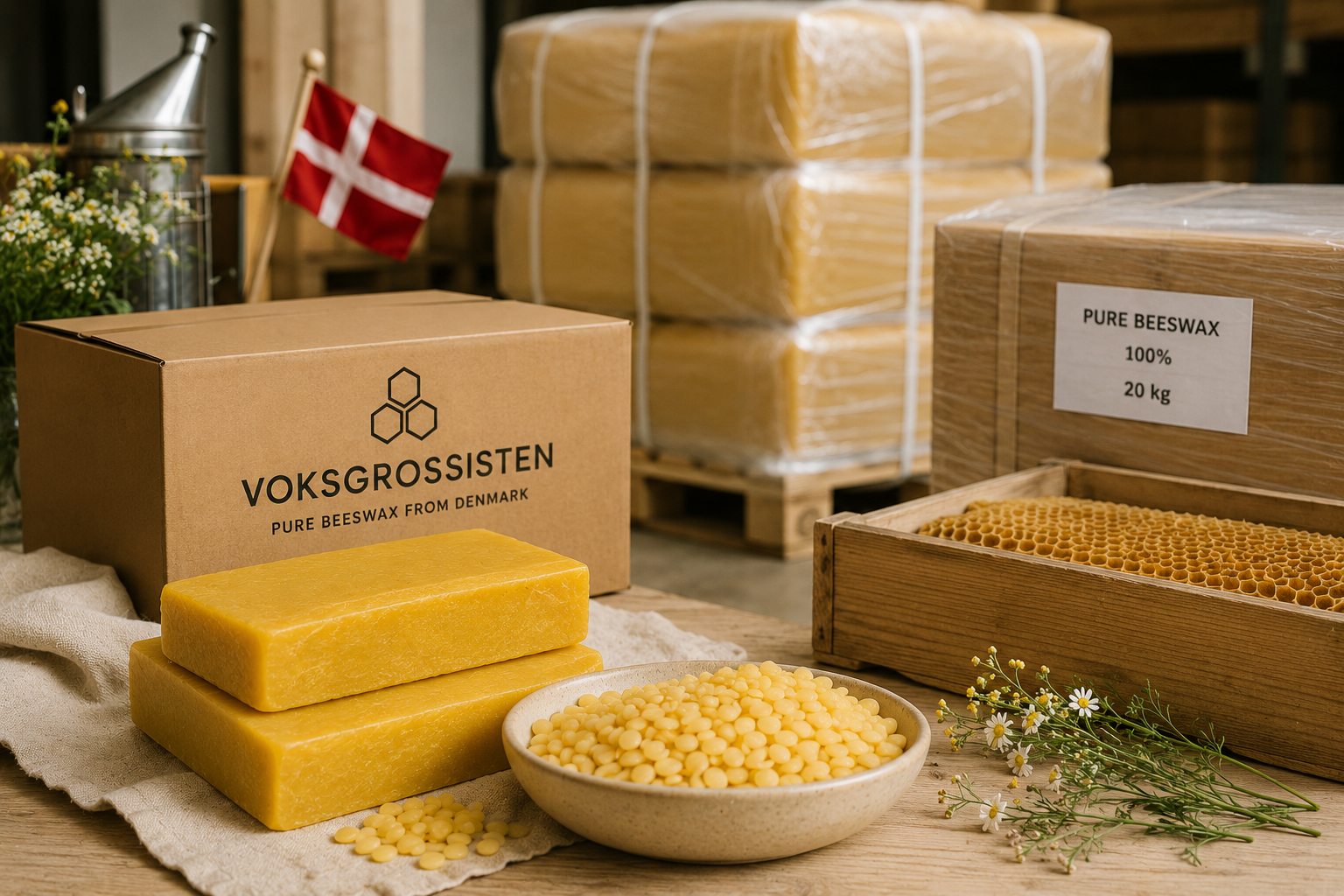
Voksgrossisten started where most beeswax stories start: with bees.Our parent company Swienty has been part of the beekeeping world since 1981 – building equipment, working with beekeepers, and developing a deep understanding of what good beeswax actually looks like. Over time, that knowledge turned into a passion for sourcing it well, and eventually into a…