
 DA
DA  EN
EN  DE
DE  NO
NO  SV
SV 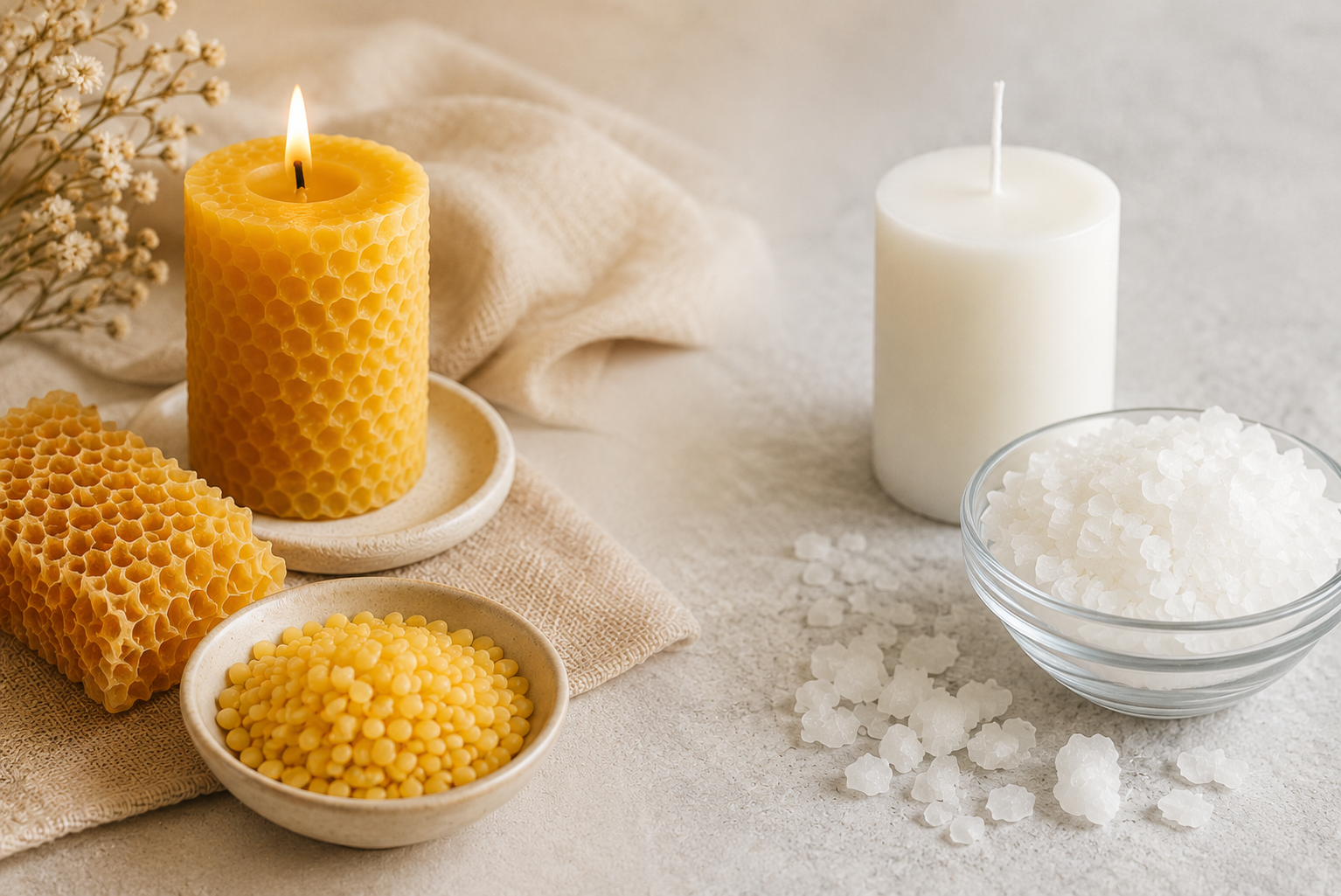
Paraffin is cheap, consistent, and easy to work with. It’s the reason it dominates candle and cosmetics manufacturing worldwide, and there’s nothing wrong with that. But for certain applications, beeswax simply does things paraffin can’t – and understanding the difference helps you make the right choice for your product.
Burn quality
Beeswax has a higher melting point than paraffin, which means candles burn slower and drip less. The flame is also naturally brighter. For premium candles where burn time and appearance matter, that’s a meaningful difference.
Scent
Beeswax has a natural, subtle honey scent that many candle makers and customers love. Paraffin is odourless, which makes it easier to control fragrance – a genuine advantage if you’re working with complex scent profiles.
Skin contact
In cosmetics, beeswax forms a breathable, protective barrier on the skin without clogging pores. It’s been used in lip balms, creams, and ointments for centuries and is well tolerated by most skin types. Paraffin-based ingredients work differently – not necessarily worse, but the mechanism is not the same.
Certification and clean-label positioning
If your product is certified natural, organic, or vegan-friendly, beeswax fits – paraffin doesn’t. As clean-label demand grows, this is an increasingly practical consideration rather than just an ethical one.
Price
Paraffin is significantly cheaper. For high-volume, price-sensitive applications, that matters. Beeswax makes sense where quality, certification, or the story behind the product justifies the cost.
The honest answer is that neither is universally better. But if you’re reading this, you’re probably already leaning towards beeswax for a reason – and we’re happy to help you figure out whether it’s the right fit for what you’re making.
→ Our products | Kontakt
Skriv et svar